The gravity of networks
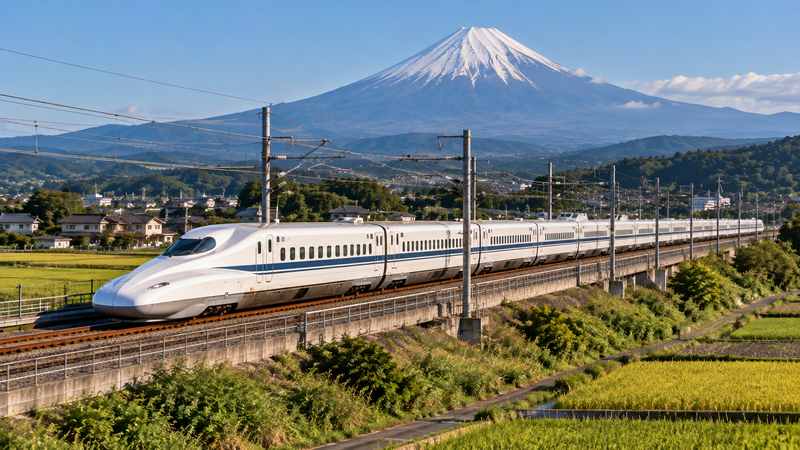
When Japan opened the Tokaido Shinkansen between Tokyo and Osaka in 1964, it seemed obvious that both cities would benefit. Osaka was already the commercial powerhouse of western Japan, and suddenly Tokyo was just a few hours away by bullet train. Surely that would be good for business? As it turned out, the benefits were far from evenly shared.
But something unexpected happened. Once executives could travel between Tokyo and Osaka and be home for dinner, why maintain major operations in both cities? Increasingly, companies chose Tokyo for their headquarters and management. Japanese economists have a name for this: the straw effect. Connect a smaller economic centre to a more powerful one and, rather than spreading the benefits, you can end up sucking even more activity towards the larger city. The Shinkansen trains travelled just as fast in both directions but the economics went just one way.
We’ve seen much the same thing happen with roads. Build a new highway between a regional town and a major city and its residents can travel more easily for work, shopping or healthcare. While local businesses have a bigger market to sell into, the reverse is also true. Suddenly, the big city retailers and service providers can reach the town without needing to set up shop there. The distance that once protected local businesses disappears. Networks can deliver better access while delivering even greater value to the largest competitors.
Human history has been about building networks. We started by connecting places, first with roads and shipping routes, then railways. Telegraphs, telephones and eventually the internet allowed information to flow over great distances. Free trade agreements brought markets closer together, while digital platforms and virtual work changed how we collaborate. More recently, big data has allowed us to bring together knowledge on a scale previously unimaginable. Now, with AI, we’re beginning to network intelligence itself. Each step has brought enormous benefits, but often with consequences nobody anticipated. And as the barriers between people, markets and ideas fall away, we don’t just change how the world connects. We change where economic activity, influence and power end up.
Perhaps the greatest promise of the internet was that it would reverse this trend. Back in the 1990s, Nicholas Negroponte predicted that digital technology would “flatten organisations, globalise society, decentralise control”. Frances Cairncross talked about the “death of distance”, while Bill Gates envisaged “friction-free capitalism”. And they weren’t entirely wrong. A software developer in Melbourne could suddenly sell to Munich. A small retailer could find customers anywhere in the world. The trouble was that Amazon could reach those same customers, with a scale that smaller competitors could never match. Local newspapers found themselves competing with Google and Facebook for advertising, while computing infrastructure, which could theoretically be located almost anywhere, became dominated by a handful of hyperscalers. The internet made geography less important, but in doing so stripped away much of the protection that distance had once given smaller businesses.
Social media was supposed to give everyone a voice, connecting us to a wider range of opinions than ever before. And while in many ways it has, a handful of influential personalities attract the largest audiences. The algorithms that decide what we see tend to favour content that keeps us engaged, often giving popular or provocative viewpoints even greater exposure. We’ve retreated into communities where everyone thinks much the same way, reinforcing our beliefs rather than challenging them. Connecting people isn’t producing a greater diversity of ideas, rather it’s polarising the population into a small number of extreme positions.
Centralisation and polarisation aren’t inevitable. The widespread adoption of virtual work during the pandemic demonstrated that collaboration no longer requires everyone to be in the same office. As I’ve argued previously, technology allows us to collapse distance across latitudes while respecting the practical constraints of time zones across longitudes. In principle, businesses can now access talent and expertise almost anywhere, which is increasingly valuable as demographic pressures limit workforce growth. But removing the technical barriers to distributed work doesn’t automatically overcome the incentives to centralise. Networks make decentralisation possible, but it takes deliberate interventions to make it happen.
We should give more credit to entrepreneurs and business leaders who resist moving to established centres. It’s perfectly rational to set up in Silicon Valley, London or Tokyo, where the money, talent and customers are already concentrated. But building a successful business elsewhere can have a much bigger impact than simply creating jobs and wealth. It gives talented people a reason to stay, brings opportunities for local suppliers and attracts investment. Before long, other businesses have a new centre of expertise to connect to, rather than having to look towards the traditional hubs. We usually judge entrepreneurs by what they build, how many people they employ and the wealth they create. Perhaps we should also recognise where they choose to do it. Building at the centre takes advantage of existing network effects. Building successfully elsewhere creates new ones for others.
Now AI is shifting the centres of gravity once again. Much as the internet opened up access to information, AI promises to put expertise and intelligence within everyone’s reach. Skills that have commanded a premium for decades could suddenly be combined with more common capabilities. As we worry about machines replacing people, perhaps we’re asking the wrong question. What happens when intelligence itself becomes networked, and the economic value of what people know and do begins to aggregate? If history teaches us anything, it’s that the biggest consequences of connecting the world are rarely the ones we expect.